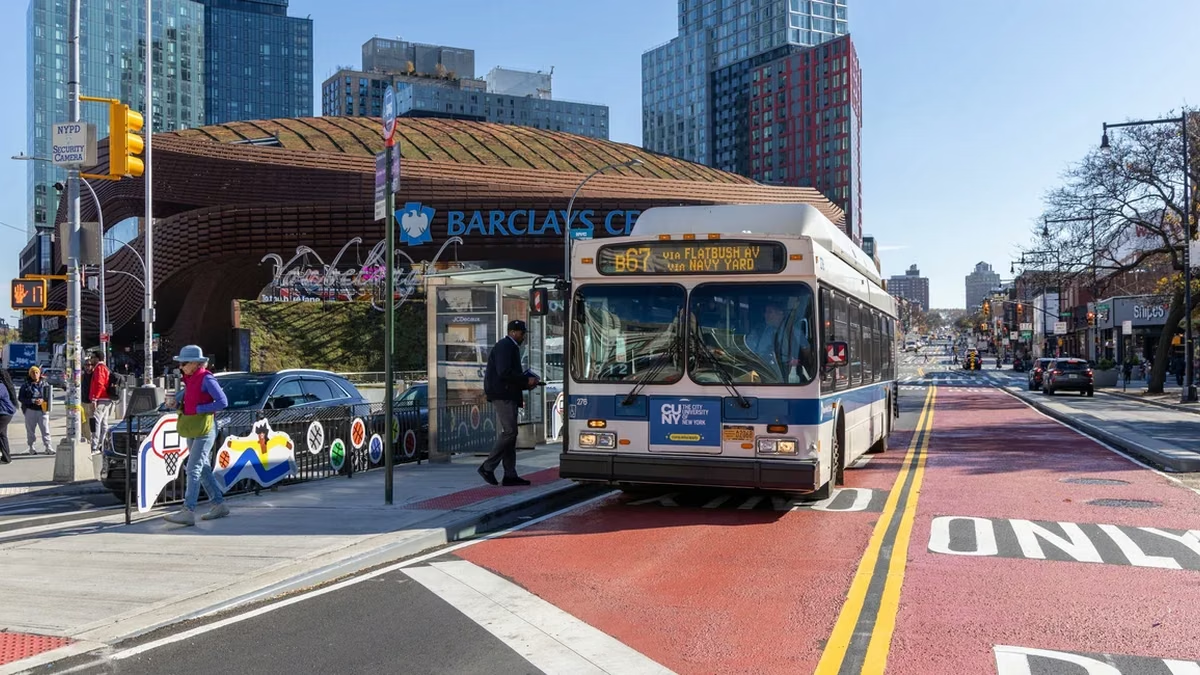
Flatbush Avenue has a new place for buses: the middle of the street. New York City unveiled two center lanes between Grand Army Plaza and Livingston Street on Nov. 17, giving buses their own space through a stretch that had slowed the B41 to a crawl.
The change covers about a mile. It doesn’t reach all the way to Kings Plaza, but the city wants to extend the idea farther along Flatbush Avenue. The first stretch is already in use.
Look for your stop in the middle of Flatbush Avenue
Six concrete islands give people a place to wait and board. The city installed bus shelters, benches and leaning bars at each island. If you’re used to looking for a stop at the curb, look for the boarding islands along the redesigned stretch.
The B41 previously averaged about 4 mph through this corridor, according to the city’s Department of Transportation. That number describes how slowly the bus used to move, not how fast it is moving now.
The city estimates the changes will benefit 120,000 daily riders across the nearby bus network. That includes people who take the B67, B45 and B103, not just the B41.
Keep cars out of the center lanes around the clock
Passenger cars can’t use the two center bus lanes at any hour. Most car traffic now runs in one lane in each direction. The restriction isn’t limited to the morning or evening rush.
The city removed 41 parking spaces and added loading zones on side streets for trucks and deliveries. It also added 36 bike racks. That leaves riders, drivers and businesses using the same stretch in different ways than before.
Watch what changes after the lanes open
For someone waiting for the B41, the useful measure is whether the trip becomes quicker and more predictable. The city expects that to happen, but its estimate of who stands to benefit isn’t a measurement of time saved.
The redesign changes where buses run and where people board right now. Extending bus priority toward Kings Plaza is a separate step, and the city’s plans for it don’t mean those farther stretches have been rebuilt.